
Hiring a Deck Contractor in Denver: What to Check First
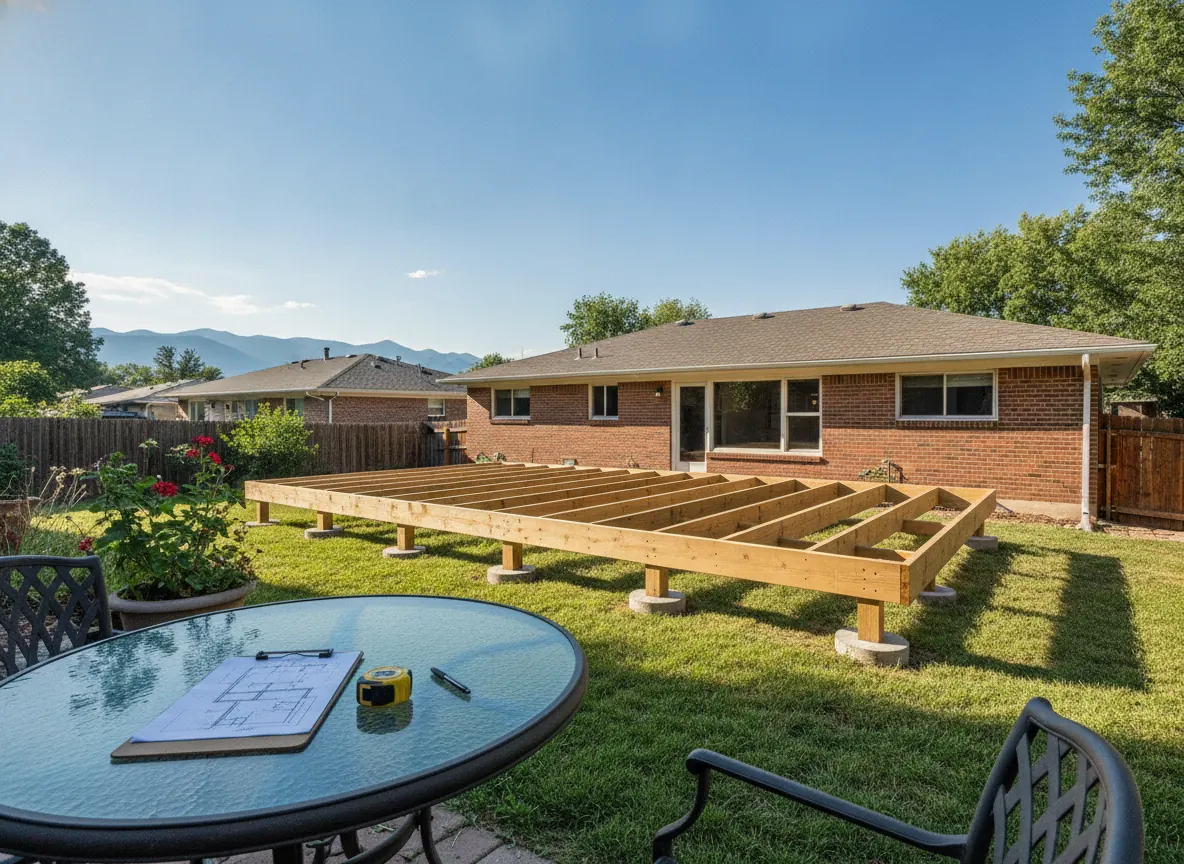
Before hiring a deck contractor in Denver, check one thing first: a current City and County of Denver contractor license. Residential deck work normally falls under Denver’s Class C residential certificate. Denver’s building code requires a license for any work that needs a permit, and most decks more than 12 inches off the ground need at least a zoning permit. In the suburbs, the license or registration comes from that city or county. Colorado does not issue one.
That one fact explains most of the confusion homeowners run into. The sections below cover what to ask for in Denver, how each suburb handles it, and how to compare deck contractor quotes once you have them. This is general information, not legal advice.
Why a Colorado deck contractor needs a city license, not a state one
Colorado has no statewide general contractor license. The state licenses electricians and plumbers. Licensing for building work, decks included, is left to cities and counties. So a contractor who builds in northwest Denver on Monday and Arvada on Thursday may need a separate credential in each place. A credential in one city does not carry over to the next.
If a company says it holds a “Colorado license,” ask which city or county issued it. The answer should match the address where your deck is going.
What a Denver deck contractor license covers
Under the 2025 Denver Building Code, the City and County of Denver issues construction certificates by class. Class C, the residential contractor class, covers work to “erect, add to, alter, or repair one- and two-family dwellings.” A deck on a house is work on the dwelling, so Class C (or the broader A or B) is the one that fits. Denver contractor licenses renew every three years.
The code also gives a Denver license holder duties you can use as a checklist:
- Get the permit before work starts.
- Use subcontractors who hold their own Denver licenses.
- Carry insurance “commensurate with the type of project.”
Permits matter here. In Denver, decks over 12 inches need a zoning permit. Decks 30 inches or more above grade, decks over 200 sq ft, and all covered decks, porches and pergolas also need a building permit. If work starts without one, the fees double, with a $100 minimum. The Denver deck permit guide covers the thresholds in full.
Doing it yourself is the one exception. Denver’s homeowner permit is only for an owner who lives in a single-family home (not a townhome, condo, duplex or ADU) and will stay at least a year after the work. The owner either does the work or hires subcontractors who hold Denver licenses.
Deck contractor rules in Aurora, Lakewood, Littleton and other suburbs
Every suburb does this a little differently, and the differences show up in the paperwork:
- Aurora: contractors need “the appropriate license” to build or alter any structure, and the city has an online licensee lookup. See deck builders in Aurora.
- Lakewood: every contractor and subcontractor must register with the city through eTRAKiT. Townhome and condo decks need a registered contractor and an HOA letter. Owners of a single-family primary home may pull their own deck permit. See deck builders in Lakewood.
- Littleton: a city license or registration is required to get permits. Decks fall under Class D miscellaneous, along with patio covers and carports. Licenses expire December 31 each year, so ask whether this year’s is current. See deck builders in Littleton.
- Highlands Ranch: it is unincorporated, so contractors register with the Douglas County Building Division, which wants liability and workers’ comp certificates on file. Homeowners also need HRCA architectural approval for a deck ($40 fee, with drawings and a site plan).
- Arvada: the city requires a contractor license for any contractor working there.
- Thornton: the city’s license packet puts deck and patio cover work in a Class D specialty.
- Centennial: it runs its own building division with its own contractor classes and fees, separate from Arapahoe County.
- Parker: “Permits are required for all decks regardless of height or size,” so even a low platform deck should come with a permit.
How to compare deck contractor quotes in Denver
A low number can hide missing work. Ask every contractor to quote the same scope, written out. Denver deck plans already have to show footing size and depth, the ledger and uplift connections, stairs, guards and handrails. A good quote names the same items:
- Footings: Denver’s frost line is 36 inches, so footings go at least that deep unless the deck is exempt. More on that in how deep deck footings go in Denver.
- Loads: Denver’s ground snow load is 43 psf, and a deck has to carry whichever is greater, the live load or the snow load.
- Attachment: the American Wood Council’s deck guide says a ledger can’t attach to brick or stone veneer, hollow masonry, cantilevered floor overhangs or bay windows. On those walls, ask whether the plan is a freestanding deck.
- Materials and railings: name the board type and railing. The composite and PVC decks and wood decks pages compare the options.
- Paper trail: a written contract with scope, materials and a payment schedule, plus proof of liability and workers’ compensation insurance.
For a reality check, published cost guides (2025–2026) put a new deck in Denver at about $34–$69 per sq ft installed, with an average project around $9,640. These are estimates, not quotes. The Denver deck cost page breaks this down by material.
Get Denver deck contractor quotes in one request
Denver CO Deck Builders is a free referral service, not a contractor. We connect Denver-area homeowners with independent local deck builders for free, no-obligation quotes. The contractor you choose quotes, permits, contracts and builds directly with you. Ask each one for the city license or registration that matches your address, then compare quotes line by line. Request free deck quotes or call (877) 265-2390.
Deck contractor FAQ
Does Colorado issue a state deck contractor license?
No. Colorado has no statewide general contractor license. Cities and counties handle contractor licensing or registration for building work, and the state licenses trades such as electricians and plumbers. That is why a deck contractor who works in Denver, Lakewood and Aurora may need a separate credential in each one.
Who pulls the deck permit in Denver?
Usually the contractor. Denver’s code says a license is required for any work that needs a permit, and the contractor must get the permit before work starts. The exception is a homeowner permit, which only owner-occupants of single-family homes can use, and only if they live there at least a year afterward.
What should two deck quotes have in common?
The same scope. Ask each contractor to spell out deck size and height, footing size and depth, how the deck attaches to the house, stairs, guards, handrails and materials. Denver plans must show those details anyway, so a quote that leaves them out is hard to compare and may be missing work.