
Composite & PVC Decks in Denver, CO
Compare free quotes on composite and PVC decks from independent local deck builders in Denver and the surrounding suburbs. We connect Denver-area homeowners with independent local deck builders for free, no-obligation quotes. The contractor you choose quotes, permits, contracts and builds directly with you.
Get a Free Quote Call (727) 300-6656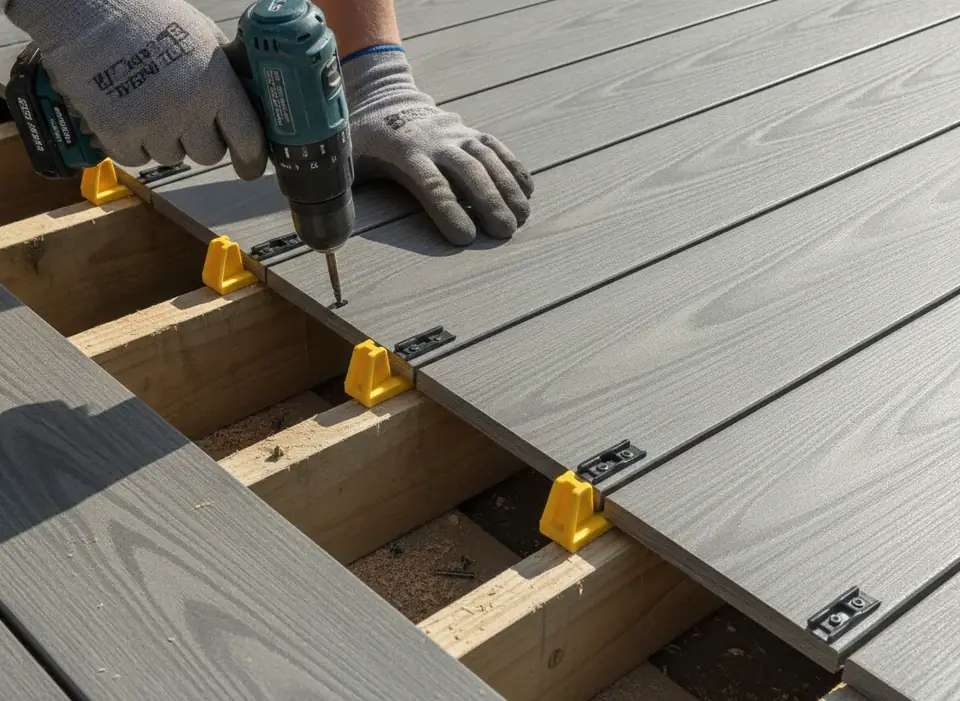
Why Denver homeowners ask about composite and PVC
Composite decking blends wood fiber and plastic, usually with a protective cap; PVC boards are all plastic. Both are sold as lower-maintenance alternatives to pressure-treated lumber and cedar.
The appeal is upkeep: wood needs periodic cleaning and re-staining, while composite and PVC skip the staining. The tradeoff is price; composite costs more up front than wood.
Denver’s climate is part of the conversation. NOAA’s 1991–2020 normals for Denver International Airport show about 156 nights a year at or below 32 °F, a July average high of 89.9 °F and 46 days a year at 90 °F or above. The city sits at 5,280 feet, and UV exposure rises with elevation (EPA). A deck surface here works through cold winters, hot summers and strong sun.
What composite and PVC decks cost in Denver
Here is how the main options compare per square foot installed, with common add-ons. For a full breakdown and a calculator, see the Denver deck cost guide.
| Item | Typical range |
|---|---|
| Composite decking, installed | $40–$80 per sq ft |
| PVC decking, installed | $50–$70 per sq ft |
| Pressure-treated wood (for comparison) | $25–$50 per sq ft |
| 12×16 deck (192 sq ft) | $7,680–$15,350 composite; $4,800–$9,600 pressure-treated |
| Railing, installed (per linear ft) | vinyl/composite $25–$60; aluminum $50–$200; glass $100–$600 |
| Deck stairs | $1,400–$2,600 installed |
| Permit | Denver fees are based on project value (no flat deck fee); national guides show about $230–$500 |
Typical ranges from published cost guides (2025–2026) — estimates, not quotes.
Quotes differ for real reasons: board line, hidden fasteners versus face screws, deck height and site access. Ask each contractor to list the board line, fastening method and railing system in writing.
Composite deck resale value: the Cost vs Value figure
The Cost vs Value 2025 report gives these figures for the Mountain region. They are a regional estimate, not a Denver appraisal.
| Project (Cost vs Value 2025) | Mountain region job cost | Recouped at resale | National recouped |
|---|---|---|---|
| Composite deck addition | about $26,342 | ~82% | ~89% |
| Wood deck addition | about $18,253 | ~97% | ~95% |
On paper, wood recoups a larger share at sale; composite’s case rests on the staining it avoids while you live there. The deck resale value guide goes deeper.
Hail and sun: questions to ask
Colorado sits in what NOAA’s National Severe Storms Laboratory calls hail alley, where the region averages about seven to nine hail days a year. The May 8, 2017 hailstorm, with baseball-size hail in Lakewood, Wheat Ridge and Golden (NWS Boulder), was Colorado’s costliest insured event. Hail can mark many outdoor surfaces, and no decking is weather-proof.
Ask each contractor how the boards and railing they propose handle impact and strong sun, and how a damaged board is replaced. Look at samples outside in daylight.
Ignition-resistant decking in wildfire areas
The Colorado Wildfire Resiliency Code was adopted by the state board on July 1, 2025. Local governments with wildland-urban interface (WUI) areas had to adopt it by April 1, 2026 and enforce it by July 1, 2026. It applies to new construction and significant additions, including ignition-resistant decking. Centennial’s version took effect June 30, 2026.
If your home is in a mapped wildland-urban interface area, your city or county may require ignition-resistant decking. Your contractor and building department can confirm. Read more in the Colorado wildfire code guide for decks.
Composite and PVC change the surface, not the structural rules: under the 2025 Denver Building Code, footings go below the 36-inch frost line and decks must carry the greater of the live load or the 43 psf ground snow load.
Permits in Denver and the suburbs
In Denver, most decks over 12 inches off the ground need a zoning permit; decks 30 inches or more above grade, decks over 200 sq ft, and all covered decks, porches and pergolas also need a building permit. Rules change; confirm with Denver Community Planning and Development. In most of the metro, an attached deck or any deck 30 inches or more above grade needs a permit; Denver adds a zoning permit above 12 inches, and Parker requires a permit for every deck.
This is general information, not legal advice.
Before you hire a deck contractor
These checks apply whatever material you choose; ask each contractor directly.
- License and permit. In Denver, the contractor holds a current City and County of Denver contractor license (residential work is normally Class C) and will pull the permit. In Aurora, Lakewood, Littleton, Arvada, Thornton, Douglas County (Highlands Ranch) and other suburbs, the contractor is licensed or registered with that city or county.
- Insurance. Ask for proof of liability and workers’ compensation insurance.
- Written contract. Get a written contract with scope, materials and payment schedule.
- Approvals. Get HOA approval, and in Denver historic districts a Certificate of Appropriateness, before work starts.
Weighing composite against wood? See wood decks in Denver for pressure-treated and cedar, and deck railings and stairs for the parts that frame the deck. If an old deck has to come out first, deck replacement covers demolition costs.
Deck quotes near Denver
Each area page covers local permit and HOA notes.
Get free deck quotes
Tell us the rough size, height and whether you are leaning composite or PVC. We usually reply the same day, and the quote is free with no obligation.
Frequently asked questions
How much does a composite deck cost in Denver?
Published cost guides (2025–2026) put composite decking at about $40–$80 per square foot installed and PVC at about $50–$70. A 12×16 composite deck of 192 sq ft typically runs $7,680–$15,350. These are estimates, not quotes. Height, railing, stairs, access and the board line chosen move the price, so compare written quotes from local deck builders.
Is composite worth it compared with wood in Colorado?
Composite costs more up front, while wood needs periodic cleaning and re-staining. Cost vs Value 2025 regional estimates for the Mountain region show a composite deck addition recouping about 82% of its cost at resale versus about 97% for wood. Many owners weigh lower upkeep against that higher starting price and the years they plan to stay.
Does a composite deck need a permit in Denver?
The board material does not change the permit rules. In Denver, most decks over 12 inches off the ground need a zoning permit, and decks 30 inches or more above grade, decks over 200 sq ft and all covered decks also need a building permit. Confirm with Denver Community Planning and Development. This is general information, not legal advice.
Do I need ignition-resistant decking under Colorado’s wildfire code?
If your home is in a mapped wildland-urban interface area, your city or county may require ignition-resistant decking. Your contractor and building department can confirm. The Colorado Wildfire Resiliency Code applies to new construction and significant additions, and local governments with WUI areas had to enforce it by July 1, 2026.
How does composite hold up to Denver hail and sun?
Colorado sits in hail alley, with about seven to nine hail days a year in that region (NOAA NSSL), and UV exposure rises with elevation (EPA). No decking is immune to weather. Ask each contractor how the boards and railing they propose handle impact and sun, how damaged boards are replaced, and to show samples outdoors.
Plan your deck before the spring building rush.
Free, no-pressure quotes across Denver, Aurora, Lakewood, Littleton, Highlands Ranch and Arvada.